Campañas de Fumigación contra el Aedes Aegypti en Colombia Must-Have Best
27/08/2026
Campañas de Fumigación contra el Aedes Aegypti en Colombia Colombia faces a persistent and growing threat from mosquito-borne diseases like dengue, Zika, and chikungunya, primarily transmitted by the Aedes aegypti mosquito. Effective vector control is not merely a public health measure but a critical necessity for safeguarding communities, especially in tropical and urban environments where this resilient vector thrives. Understanding the nuances, challenges, and evolving best practices within these fumigation campaigns is essential for anyone involved in public health, urban planning, or community resilience efforts in the country. This article delves into the current state, key strategies, obstacles, and the integrated approaches that define truly effective Aedes aegypti control in Colombia today.
Why Fumigation Campaigns Remain a Cornerstone (But Aren't the Whole Story)
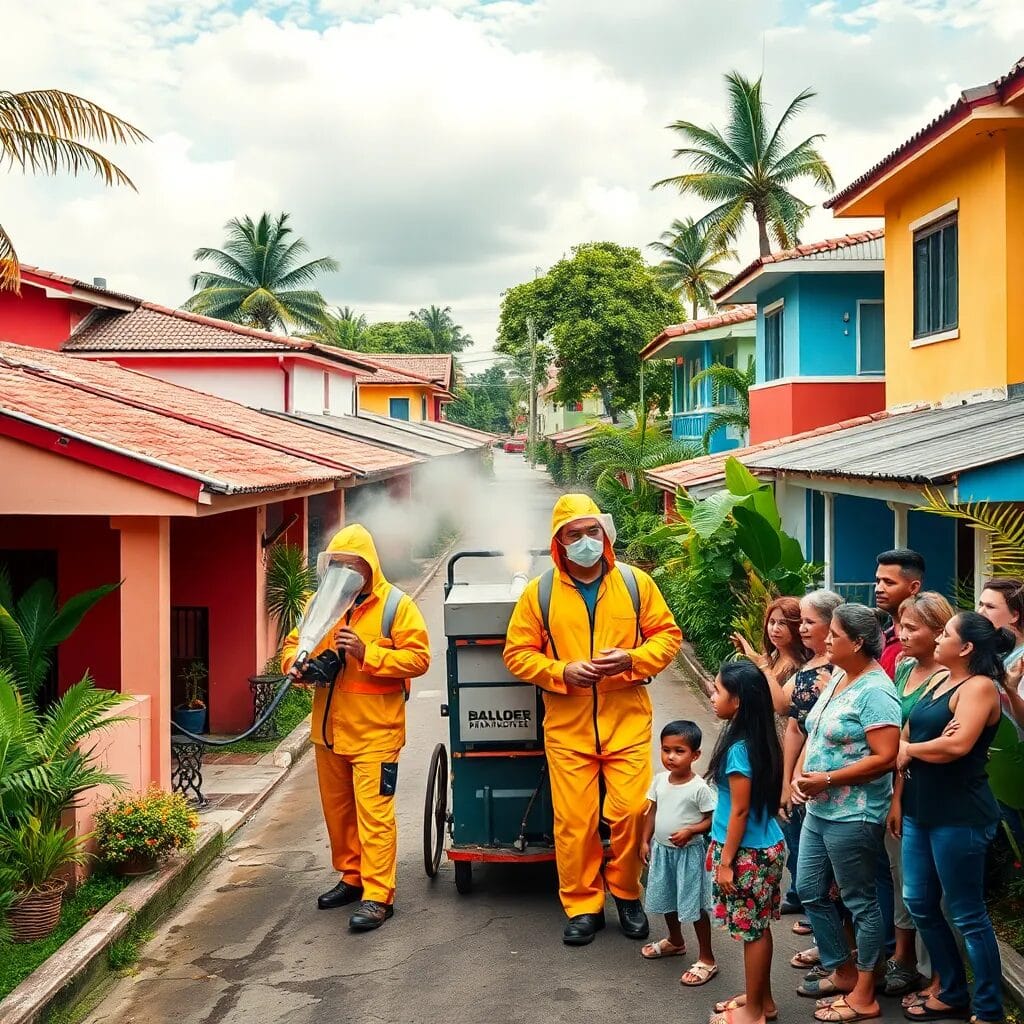
The focus keyword, "Campañas de Fumigación contra el Aedes Aegypti en Colombia," often evokes images of trucks spraying insecticidal fog through city streets. While this space spraying (typically Ultra-Low Volume or ULV application targeting adult mosquitoes) is a visible and rapid-response tool, especially during outbreak surges, Colombian health authorities increasingly emphasize it as one component of a broader Integrated Vector Management (IVM) strategy. Relying solely on fumigation presents significant limitations. Aedes aegypti is notoriously adaptable, resting indoors and breeding in tiny artificial water containers (like flower vases, tires, or bottle caps) commonly found around homes. Space spraying only kills adult mosquitoes exposed to the fog at that specific moment; it has little impact on eggs, larvae, or pupae hidden indoors or in sheltered outdoor areas. Furthermore, indiscriminate or poorly timed spraying can harm beneficial insects, contribute to insecticide resistance, and create a false sense of security among residents.
Colombia's approach, guided by the Ministry of Health and Social Protection (MinSalud) and the National Institute of Health (INS), has evolved significantly. Modern campaigns prioritize targeted, data-driven interventions based on entomological surveillance (monitoring mosquito density and species) and epidemiological data (tracking human cases). Fumigation is now strategically deployed:
During Outbreaks: As an emergency measure to rapidly reduce adult mosquito density and interrupt transmission cycles when cases spike.
In High-Risk Zones: Focused on neighborhoods with historically high transmission, recent case clusters, or high Aedes indices (like the House Index or Breteau Index), often identified through community reporting and vector surveys.
Using Approved Insecticides: Following WHO prequalification and national rotation schedules to mitigate resistance. Common classes include pyrethroids (deltamethrin, permethrin) and organophosphates (malathion, fenitrothion), with rotation being critical to preserve efficacy.
Beyond the Fog: Essential Complementary Strategies
True success in Colombia's fight against Aedes aegypti hinges on integrating fumigation with other IVM pillars, recognizing that sustainable control requires altering the mosquito's environment and empowering communities:
1. Source Reduction (Elimination of Breeding Sites): This is the most fundamental and cost-effective long-term strategy. Campaigns heavily emphasize descacharrizado (removal of unusable water-holding containers) and promoting practices like covering water storage tanks, changing water in flower vases pet bowls weekly, and cleaning gutters. Community clean-up days (jornadas de limpieza) are regularly organized, often coinciding with fumigation schedules.
2. Larviciding: Treating standing water that cannot be eliminated (e.g., certain water storage containers, drains, or ponds) with WHO-approved larvicides (like Bacillus thuringiensis israelensis - Bti, or pyriproxyfen) targets the mosquito at its most vulnerable stage, preventing emergence of adults. This is particularly valuable in areas where source reduction is challenging.
3. Community Engagement and Education (Social Mobilization): Top-down spraying alone fails if residents don't understand why they need to empty that plant saucer or allow access to their homes. Successful campaigns invest heavily in culturally sensitive communication. This includes:
Door-to-door visits by community health workers (promotores de salud) explaining risks and demonstrating container inspection.
School-based programs teaching children about mosquito biology and prevention.
Local radio spots, social media content, and partnerships with community leaders (juntas de acción communal, religious groups) to spread key messages like "¡Zancudo, fuera!" or "Tapar, lavar, tirar."
Ensuring fumigation teams are respectful, explain their purpose, and gain consent before entering homes (where indoor residual spraying or targeted ULV might occur).
4. Surveillance and Monitoring: Continuous entomological and epidemiological tracking is vital. This involves regular larval surveys in households, ovitrap placement to monitor egg-laying activity, and rapid reporting of suspected cases. Data guides where and when to intensify efforts, moving from reactive to proactive control.
Navigating the Challenges: Resistance, Access, and Sustainability
Despite progress, Colombian fumigation and IVM programs face significant hurdles:
Insecticide Resistance: Widespread resistance to pyrethroids (the most commonly used class for space spraying) has been documented in Aedes aegypti populations across multiple Colombian departments (e.g., Atlántico, Bolívar, Santander). This drastically reduces the efficacy of standard fogging operations. Addressing this requires rigorous resistance monitoring (using CDC bottle assays or similar), strict adherence to insecticide rotation based on local resistance data, and exploration of newer chemistries or non-chemical approaches (like Wolbachia-infected mosquito releases, currently being piloted in some areas).
Operational Reach and Access: Dense informal settlements (barrios populares), areas with ongoing security concerns, or remote rural zones can be difficult for fumigation teams to access consistently. Gaps in coverage create refuges for mosquito populations. Innovative solutions involve leveraging local community networks for surveillance and source reduction, and using mobile technology for better route planning and reporting.
Resource Constraints: Sustaining funding for year-round IVM (not just outbreak response), maintaining equipment, training personnel, and ensuring consistent supplies of effective insecticides and larvicides remains a challenge, particularly for municipal health departments competing with other priorities.
Community Fatigue and Misconceptions: Repeated fumigation without visible long-term impact (due to resistance or incomplete IVM) can lead to resident apathy or resistance to allowing teams onto their property. Misconceptions about the safety of insecticides (despite proper application) also persist, necessitating clear, transparent communication about risks and benefits.
The Path Forward: Integrated, Adaptive, and Community-Centric
The most successful and sustainable "Campañas de Fumigación contra el Aedes Aegypti en Colombia" are those that transcend the fogging truck. They embody true IVM:
Evidence-Based: Decisions driven by local entomological and epidemiological surveillance data, not just case numbers or seasonal assumptions.
Adaptive: Strategies continuously adjusted based on resistance monitoring, effectiveness assessments, and changing environmental/urban dynamics.
Equitable: Prioritizing underserved communities often at highest risk, ensuring access to resources and information.
Community-Owned: Moving beyond passive compliance to active partnership, where residents are seen as essential stakeholders in surveillance, source reduction, and health promotion.
Holistic: Recognizing that vector control is intertwined with water storage practices, waste management, urban planning, and even housing improvement.
Looking ahead, Colombia's commitment to integrating novel tools (like genetic control strategies or improved traps) alongside strengthened core IVM components, coupled with sustained political will and community empowerment, offers the best hope for reducing the burden of Aedes-borne diseases. The goal isn't just to fog the streets when cases rise, but to build resilient neighborhoods where the Aedes aegypti mosquito finds fewer places to breed, feed, and thrive – making the need for emergency fumigation campaigns progressively rarer. This integrated, adaptive, and community-driven approach represents the evolving best practice for protecting public health in Colombia's ongoing battle against this pervasive vector. (Approx. 680 words)
Si quieres conocer otros artículos parecidos a Campañas de Fumigación contra el Aedes Aegypti en Colombia Must-Have Best puedes visitar la categoría Novedades. O buscas Empresas de Control de Plagas y Fumigación ingresa a Todo Fumigación actualizado a 2026
Deja una respuesta