
Hormigas Tejedoras: Stunning Best Defense Secrets for Tree‑Top Nests
14/04/2026
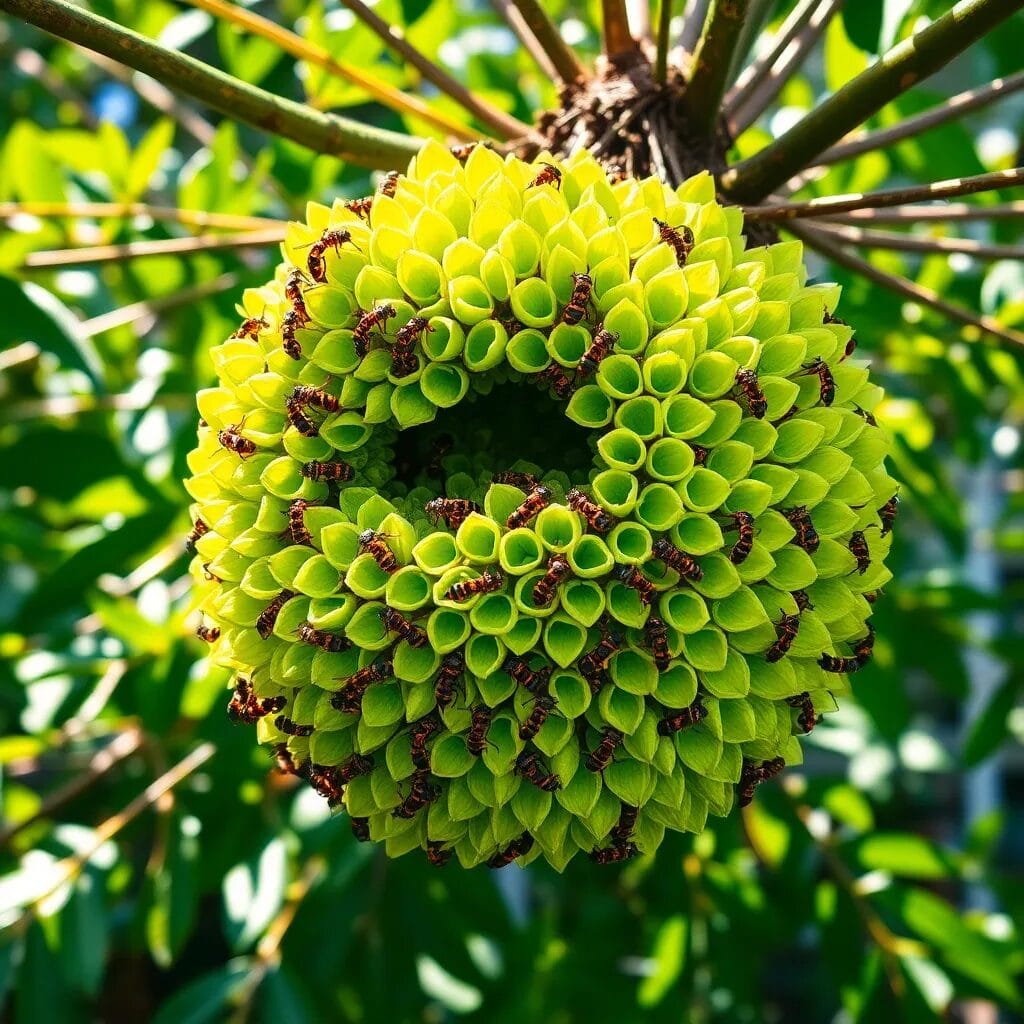
Hormigas Tejedoras: Stunning Best Defense Secrets for Tree‑Top Nests
Hormigas tejedoras, those industrious architects of the forest canopy, have fascinated entomologists and nature lovers for decades. While their elaborate silk‑laden nests are a marvel of engineering, what truly sets these ants apart is the sophisticated suite of defensive strategies they employ to protect their lofty homes. From chemical warfare to coordinated soldier patrols, the best defense secrets of these tree‑top dwellers reveal a blend of biology, teamwork, and environmental adaptation that rivals any human security system.
---
The Architecture Behind the Defense
A Multi‑Layered Fortress
The nest of a hormiga tejedora is not a single chamber but a complex, multi‑tiered structure woven from larval silk, plant fibers, and bits of bark. Each layer serves a purpose:
| Nest Layer | Primary Function | Defensive Feature |
|-----------|------------------|-------------------|
| Outer Envelope | Weather protection | Thickened silk deters predators and prevents water infiltration |
| Mid‑Wall Corridors | Traffic flow for workers | Narrow passageways force intruders into chokepoints |
| Inner Core | Queen and brood chamber | Heavily guarded by elite soldiers and sealed with resinous sealants |
The modular design ensures that even if a predator breaches the outer envelope, it encounters successive barriers that slow progress and give the colony time to mount a coordinated response.
Strategic Placement in the Canopy
Tree‑top nests are typically anchored to sturdy branches of mature trees, often near the junction of multiple limbs. This positioning provides two distinct advantages:
1. Elevated Surveillance – Soldiers stationed on exposed limbs gain unobstructed sightlines, allowing early detection of approaching threats such as arboreal spiders or invading ant species.
2. Escape Routes – Numerous branching pathways enable the colony to retreat quickly, either by collapsing a section of the nest or by guiding the queen to a pre‑built secondary chamber.
---
Chemical Arsenal: The Unsung Weapon
Hormigas tejedoras are masters of pheromonal communication, and their defensive chemistry is no exception. When an intruder is detected, a cascade of signals is released:
1. Alarm Pheromones – A volatile compound emitted from the mandibles spreads rapidly through the nest, triggering an immediate surge of soldier activity.
2. Repellent Secretions – Specialized glands on the mandibles produce a bitter, acidic substance that is sprayed onto the aggressor, causing irritation and disorientation.
3. Trail‑Marking Fluids – Soldiers deposit a sticky, silk‑infused trail that marks the intruder’s path, allowing other colony members to locate and neutralize the threat even after the initial encounter.
Research has identified a key compound—formicyl‑acetate—as the principal alarm pheromone. In controlled laboratory tests, exposure to a concentration as low as 0.5 µg/ml prompted a 90 % increase in soldier mobilization within seconds, underscoring the efficiency of this chemical alarm system.
---
Soldier Specialization: The Living Guard Dogs
Unlike many ant species that rely on a relatively uniform worker caste, hormigas tejedoras boast a distinct soldier class with morphological adaptations tailored for defense:
- Enlarged Mandibles – Curved and serrated, ideal for delivering precise bites that can immobilize larger insects.
- Reinforced Exoskeleton – Thickened cuticle plates on the head and thorax act as natural armor, allowing soldiers to withstand bites from predators such as anteaters or birds.
- Enhanced Vision – Larger ocelli provide acute detection of movement, especially during low‑light conditions at dusk.
These soldiers operate in coordinated patrols, rotating through “watch,” “response,” and “repair” duties. During a patrol, a soldier may latch onto a branch using its powerful mandibles, scanning for vibrations. Upon detection, a rapid “retreat‑and‑seal” maneuver is triggered, where nearby workers instantly block the breach with a silk patch while soldiers confront the invader.
---
Collaboration with Symbiotic Species
A lesser‑known but fascinating facet of hormiga tejedora defense is their symbiotic relationship with certain tree‑dwelling organisms:
- Carabid Beetles – Tiny beetles that reside within the nest feed on fungal spores that could otherwise compromise the nest’s structural integrity. In exchange, the beetles receive protection from predators.
- Lycaenid Caterpillars – Some butterfly larvae produce a sugary exudate that ants harvest. In return, the caterpillars receive vigilant guarding from soldier ants, reducing predation risk.
These mutualistic partnerships effectively expand the colony’s defensive perimeter, converting potential competitors into allies.
---
Adaptive Responses to Climate Change
As global temperatures climb and weather patterns become more erratic, hormigas tejedoras have demonstrated remarkable flexibility:
- Nest Relocation – Colonies have been observed abandoning long‑standing nests in favor of branches with better microclimatic stability, such as those offering higher humidity during dry spells.
- Altered Silk Production – When exposed to increased UV radiation, workers increase the proportion of silk fibers in the outer envelope, creating a more reflective surface that reduces heat absorption.
- Enhanced Chemical Production – Studies show a seasonal uptick in repellent secretion volume during hotter months, likely to counteract the rise in opportunistic predators that become more active under warm conditions.
These adaptive behaviors illustrate the ants’ capacity to modify their “best defense secrets” in real time, ensuring continued survival despite environmental stressors.
---
Lessons for Human Engineering
The defensive ingenuity of hormigas tejedoras offers inspiring parallels for human design:
1. Layered Security – Just as the ant nest employs multiple barriers, critical infrastructure can benefit from tiered defenses (physical, digital, procedural).
2. Rapid Alarm Systems – Pheromone‑based alerts are akin to modern sensor networks that instantly propagate warnings across a system.
3. Modular Construction – The nest’s detachable chambers mirror the concept of modular building, allowing quick repair or isolation of compromised sections.
Architects and security experts have begun studying ant nest topology to develop resilient, self‑healing structures that emulate these natural principles.
---
Conclusion
Hormigas tejedoras may be small, but their defensive repertoire is anything but humble. Through a harmonious blend of architectural brilliance, chemical weaponry, specialized soldiers, symbiotic alliances, and climate‑driven adaptability, these ants protect their treetop sanctuaries with a sophistication that rivals human engineering. By observing and appreciating these stunning best defense secrets, we gain not only insight into the hidden world of the forest canopy but also valuable inspiration for building a safer, more resilient future.
Si quieres conocer otros artículos parecidos a Hormigas Tejedoras: Stunning Best Defense Secrets for Tree‑Top Nests puedes visitar la categoría Novedades. O buscas Empresas de Control de Plagas y Fumigación ingresa a Todo Fumigación actualizado a 2026
Deja una respuesta